 By Admin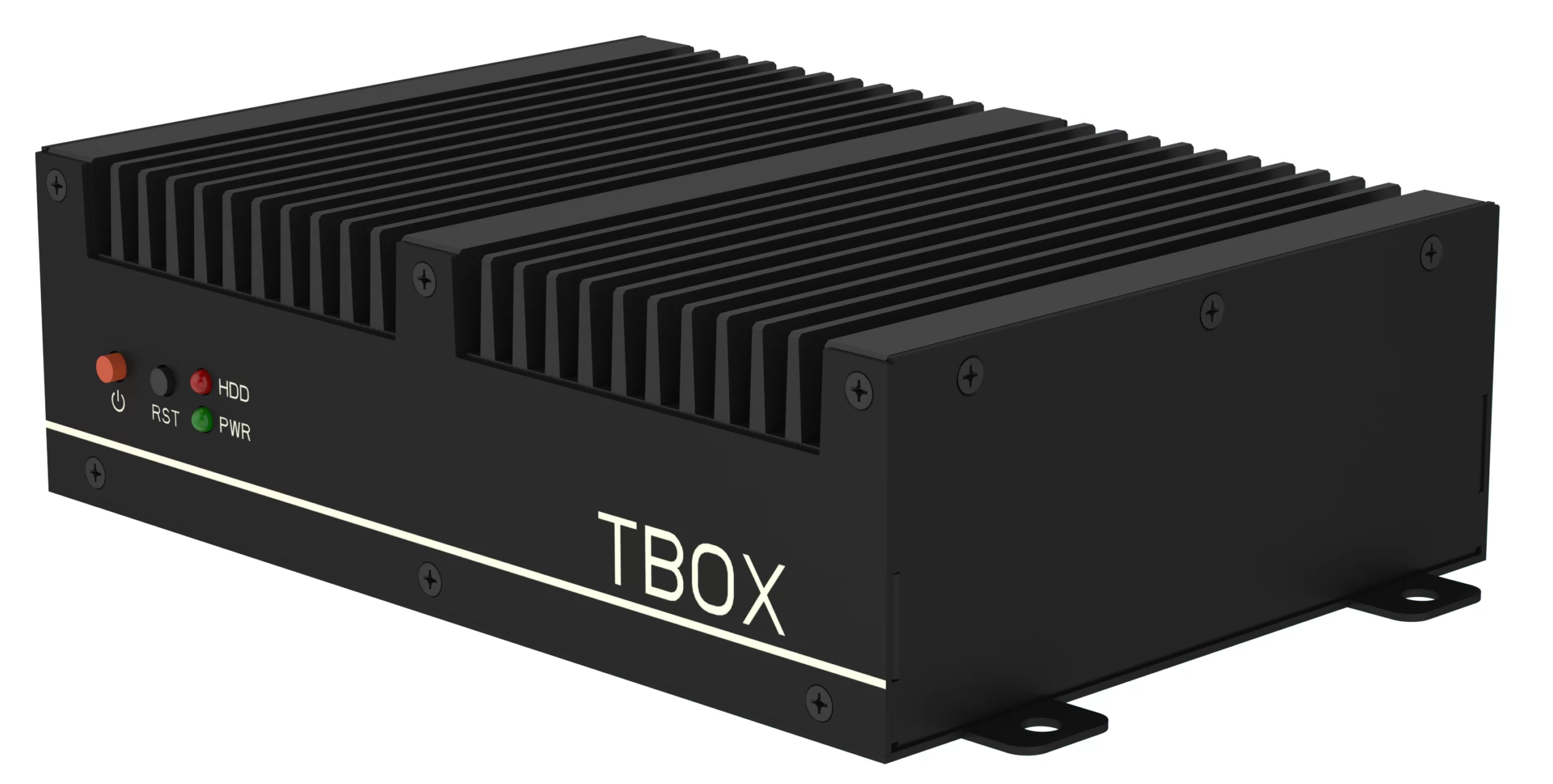
If you are an engineer evaluating your next automation upgrade, this question comes up every single time.
Should you go with a fanless PC or stick with a traditional industrial PC?
It sounds simple. But the answer has real consequences for your production uptime, your maintenance budget, and your total cost of ownership over the life of the system. Make the right call, and your automation infrastructure runs reliably for years. Make the wrong call, and you are dealing with unexpected downtime, escalating maintenance costs, and frustrated operations teams.
This guide gives you a clear, honest, technical comparison so you can make a confident decision for your specific environment.
Understanding the Core Difference
A traditional industrial PC uses active cooling. Fans, heatsinks, and ventilation systems draw air through the enclosure to manage internal temperatures. These systems are powerful, well understood, and have been the backbone of factory automation for decades.
A fanless PC eliminates moving parts entirely. Heat transfers from the processor through internal heat pipes directly to the outer chassis, which acts as a passive heatsink. No fans. No vents. No moving components inside the enclosure whatsoever.
That single architectural difference creates real implications across reliability, maintenance, durability, and total cost of ownership that every automation engineer needs to understand before making a buying decision.
Reliability — The Strongest Argument for Going Fanless
In industrial automation, unplanned downtime costs money. Sometimes, enormous amounts of money per hour.
The number one cause of failure in traditional industrial PCs is mechanical component failure. And the most common mechanical component that fails is the cooling fan. Bearings wear out. Fan blades collect debris. Airflow gets restricted. Internal temperatures climb. Eventually, the system crashes or fails.
A fanless industrial PC for automation eliminates this failure mode. With no moving parts inside the sealed enclosure, there is nothing to wear out mechanically. Mean time between failures for fanless systems is significantly higher than fan-cooled alternatives, particularly in harsh and demanding environments.
For production lines, robotic cells, conveyor systems, and process control applications where continuous uptime is non-negotiable, that reliability advantage is a core specification requirement, not just a nice-to-have feature.
Dust Resistance — Critical in Real Factory Environments
Walk through any real factory floor, and you will find the same thing everywhere. Dust, metal shavings, fibres, and airborne particulates are present in virtually every production environment.
Traditional industrial PCs draw air through their enclosures continuously, which means they also draw in every airborne contaminant in the environment. Dust accumulates on fan blades, heatsinks, and internal components over time. Airflow becomes progressively restricted. Thermal management degrades. In heavily contaminated environments, internal contamination can even create conductive pathways between components that cause electrical failures well before the system reaches its expected end of life.
Managing this requires scheduled preventive maintenance. Filters need cleaning or replacing regularly. Internal components need compressed air blowouts. In dirty environments, this cycle can be monthly.
A fanless embedded box PC has no intake vents. The enclosure is fully sealed. Dust and particulates cannot enter the system at all. For food processing, woodworking, metalworking, textile manufacturing, and any environment where airborne contamination is constant, the sealed architecture is not just convenient. It is the only technically appropriate solution.
Thermal Management — More Capable Than You Might Expect
A common misconception is that passive cooling means limited performance. That was true a decade ago. It is not accurate in 2026.
Modern fanless industrial control PCs use advanced conduction cooling that manages heat very effectively. Internal copper heat pipes transfer processor heat to an aluminium or magnesium alloy outer chassis, which dissipates it passively and continuously.
Leading fanless factory automation computers operate reliably across ambient temperature ranges from minus 20 degrees Celsius to plus 70 degrees Celsius, depending on platform specification. Traditional fan-cooled systems typically operate within tighter ambient temperature windows. In environments that routinely hit 50 degrees Celsius ambient, a properly specified fanless system handles those conditions comfortably, while a fan-cooled system operates near the edge of its thermal envelope.
For outdoor deployments, foundry environments, mining operations, and applications with extreme and variable ambient temperatures, the thermal resilience of a fanless system is a clear technical advantage.
The one area where traditional industrial PCs still hold an edge is very high-compute sustained workloads. Applications generating extreme continuous heat loads may still benefit from active cooling. For the majority of automation control, HMI, SCADA, machine vision, and data acquisition applications, however, modern fanless platforms deliver fully adequate processing performance.
Maintenance Cost and Total Cost of Ownership
This is where the financial case becomes very clear.
Traditional industrial PCs require scheduled preventive maintenance. Filter cleaning, fan inspection, internal cleaning, and periodic fan replacement as bearings approach the end of life. In a facility running multiple traditional industrial computers, this maintenance burden adds up to significant labour hours and parts costs every year.
A fanless industrial computer for automation has no scheduled mechanical maintenance requirements. The sealed enclosure needs no periodic internal access. There are no consumable mechanical components to replace on a predictable cycle.
Over a five year operational lifecycle, the maintenance cost difference between a fleet of fanless embedded box PCs and a comparable fleet of traditional fan-cooled systems is consistently significant. When engineers run a genuine total cost of ownership analysis that includes acquisition cost, scheduled maintenance labour, consumable replacement, and unplanned downtime costs, fanless systems regularly come out ahead despite carrying a higher upfront hardware cost.
When a Traditional Industrial PC Still Makes Sense
To give you a genuinely useful evaluation rather than a one-sided argument, there are scenarios where a traditional industrial PC remains the right choice.
If your application demands the absolute highest sustained processing performance and generates heat loads that exceed what conduction cooling can manage cost-effectively, a well-maintained fan-cooled system in a properly conditioned environment is still a legitimate choice.
If your facility has a clean, temperature-controlled, low-vibration environment and a mature preventive maintenance programme, the operational disadvantage of active cooling is significantly reduced.
The key variable in every scenario is the environment. In clean, controlled environments, traditional industrial PCs perform well with appropriate maintenance. In harsh, contaminated, thermally variable, or high-vibration environments, the case for fanless becomes compelling and very difficult to argue against.
Quick Comparison: Fanless PC vs Traditional Industrial PC
Reliability: Fanless wins. No mechanical failure modes versus ongoing fan and bearing wear risk.
Dust Resistance: Fanless wins. Fully sealed enclosure versus progressive internal contamination through ventilation.
Thermal Range: Fanless wins in extreme environments. Traditional systems suit stable, controlled conditions better.
Upfront Cost: A traditional industrial PC typically has a lower upfront investment.
Total Cost of Ownership: Fanless wins over a five year lifecycle when maintenance and downtime costs are included.
Vibration Resistance: Fanless wins. No moving parts means no mechanical degradation from vibration exposure.
5 Essential FAQs
Q1: What is a fanless PC, and how does it work in industrial automation?
A fanless PC uses conduction cooling, transferring processor heat through internal heat pipes to the outer chassis, which dissipates it passively. In industrial automatio,n it is used as an embedded control computer, HMI platform, SCADA system, or machine vision processor where reliability and low maintenance are critical.
Q2: Are fanless PCs powerful enough for factory automation?
Yes, for the vast majority of industrial automation applications. Modern fanless industrial control PC platforms deliver fully adequate performance for automation control, HMI operation, SCADA management, data acquisition, and machine vision processing.
Q3: How do maintenance costs compare between fanless and traditional industrial PCs?
Traditional industrial PCs require scheduled filter cleaning, fan inspection, and periodic fan replacement. Fanless systems have no scheduled mechanical maintenance requirements. Over a five year lifecycle, the total maintenance cost savings from a fanless platform are significant, particularly in multi-system deployments.
Q4: Can a fanless industrial PC handle extreme temperatures?
Yes. Leading fanless industrial computer platforms operate across ambient temperature ranges from minus 20 degrees Celsius to plus 60 or 70 degrees Celsius, depending on the platform specification. This makes them appropriate for outdoor deployments, foundry environments, cold storage, and other thermally demanding applications.
Q5: Which industries benefit most from fanless industrial computers?
Food and beverage processing, pharmaceutical manufacturing, metal fabrication, woodworking, mining, oil and gas, water treatment, and any environment with significant airborne contamination, high vibration, extreme temperatures, or strict hygiene requirements benefits most from fanless industrial computing platforms.
The Bottom Line
For most engineers evaluating automation upgrades in real industrial environments in 2026, the fanless embedded box PC delivers a compelling combination of reliability, durability, sealed protection, and total cost of ownership that traditional industrial PCs genuinely struggle to match across a full operational lifecycle.
If your environment is harsh, contaminated, thermally variable, or vibration-heavy, the case for fanless is clear. If your environment is clean and well maintained, run a proper total cost of ownership analysis before deciding on upfront cost alone.
Your automation infrastructure will be running on that decision for the next five to ten years. Make it count.
 Seo Feast