 By Khizar Seo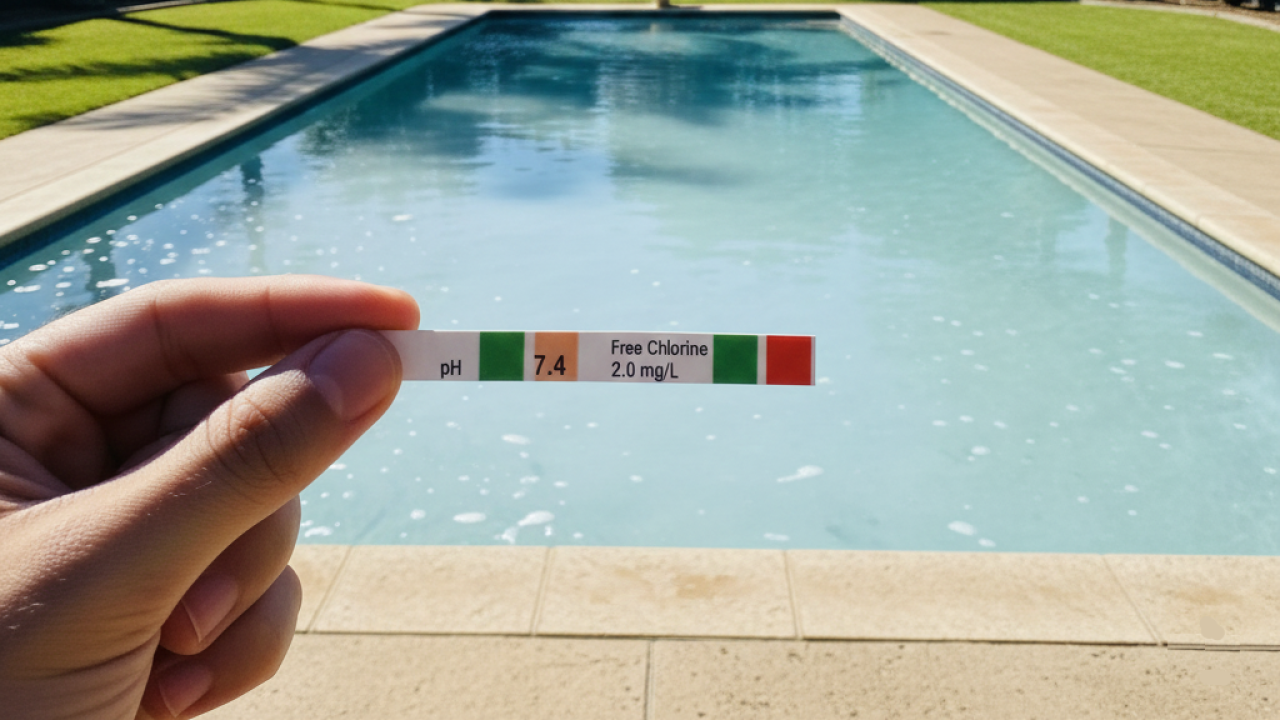
maintaining a swimming pool is often compared to a high school chemistry experiment. You have various liquids and powders, precise measurements, and the goal of creating a stable, safe environment. Among all the chemical parameters you must monitor, pH is arguably the most critical. It acts as the thermostat for your water quality, dictating everything from how effectively your sanitiser works to how the water feels on your skin.
Many pool owners struggle with finding the right rhythm for maintenance. Test too infrequently, and you risk algae blooms or equipment damage. Test obsessively, and you might find yourself micromanaging the water, leading to “chemical yo-yoing” where levels swing wildly back and forth. Understanding the ideal frequency for testing and adjusting pH is the key to a hassle-free swimming season.
The Ideal Testing Schedule
For the average residential pool, consistency is more important than perfection. In an ideal world, you would test your water every single day. While this might sound tedious, daily testing provides the most accurate snapshot of how your pool behaves under different conditions. It allows you to catch minor drifts before they become major problems requiring expensive chemical corrections.
However, for most homeowners, daily testing is not always practical. A more realistic and widely accepted schedule is to test the pH levels two to three times a week. This frequency is sufficient to monitor trends without dominating your schedule. If your pool is heated or sees heavy usage, you should lean towards the three-times-a-week end of the spectrum. Conversely, during cooler months or periods of inactivity, twice a week may suffice.
Understanding Why pH Fluctuates
To understand why regular testing is necessary, you must recognise the factors that constantly push your pH out of balance. Water is a dynamic environment, not a static one.
Rainwater is a primary disruptor. Most rain is slightly acidic, which can lower your pool’s pH over time. Conversely, heavy storms can wash soil and debris into the pool, introducing phosphates and altering alkalinity.
Bather load is another significant factor. Swimmers introduce sweat, oils, sunscreen, and cosmetics into the water. These organic contaminants react with chlorine and can cause pH shifts. The more people you have in the pool, the more volatile the chemistry becomes.
Even your sanitiser plays a role. Salt chlorine generators, which are incredibly popular, naturally cause pH to rise over time due to the chemical process of electrolysis. If you use a salt system, you will likely find yourself adding acid frequently to keep the pH down.
The Consequences of Ignoring pH Balance
Skipping your testing schedule can have expensive consequences. The pH scale ranges from 0 to 14, with 7 being neutral. The sweet spot for swimming pool water is slightly alkaline, between 7.4 and 7.6. This specific range matches the pH of the human eye and mucous membranes, ensuring swimmer comfort.
If the pH drops below 7.2, the water becomes acidic. Acidic water is “hungry” and aggressive. It will seek to satisfy its hunger by eating away at pool surfaces and equipment. This leads to the etching of plaster, the wrinkling of vinyl liners, and the corrosion of metal components like heater cores and pump seals.
On the flip side, if the pH rises above 7.8, the water becomes basic. High pH causes calcium to come out of solution, leading to cloudy water and scale formation on tiles and salt cells. Most critically, high pH drastically reduces the effectiveness of chlorine. At a pH of 8.0, your chlorine is significantly less active than at 7.4, meaning bacteria and algae can thrive even if your sanitiser levels appear normal on a test strip.
How to Adjust pH Levels Correctly
When your testing reveals a drift, immediate but measured action is required. Small adjustments are always better than large ones.
To lower high pH, you typically use muriatic acid (hydrochloric acid) or sodium bisulfate (dry acid). When handling acids, always add the chemical to a bucket of water to dilute it before pouring it into the pool, and ensure the pump is running to circulate the mixture.
To raise low pH, you use sodium carbonate, often sold as soda ash. It is important not to confuse this with sodium bicarbonate (baking soda), which is primarily used to raise alkalinity, though it has a minor effect on pH.
When making adjustments, never try to fix a large discrepancy in a single dose. Calculate the required amount, add half or three-quarters of it, let the water circulate for four to six hours, and then retest. This prevents overshooting your target and swinging the balance too far in the opposite direction.
The Role of Total Alkalinity
You cannot discuss pH without mentioning Total Alkalinity (TA). Think of alkalinity as the anchor for your pH. It acts as a buffer to absorb changes and keep the pH stable.
If your TA is too low, the pH will be erratic and bounce rapidly with even minor additions of chemicals or rain. If the TA is too high, the pH will be stubborn and difficult to change, often drifting high and staying there.
You should test alkalinity once a week. Adjusting alkalinity should always be your first step. Once the alkalinity is in the correct range (usually 80 to 120 ppm), managing the pH becomes significantly easier.
Reducing Chemical Demand Through Cleaning
One often overlooked aspect of pH management is physical cleanliness. Organic debris decaying in the water releases acids and consumes sanitiser, which can throw off your chemical balance. Keeping the pool clean reduces the chemical workload.
Leaves and insects floating on the surface should be removed promptly. Using a high-quality pool skimmer allows you to automate this process. By capturing debris before it sinks and decays, you minimise the organic load on the water, helping to stabilise pH levels naturally.
Similarly, sediment on the floor can harbour bacteria and algae spores. Regular vacuuming is essential. For many pool owners looking to reduce manual labour, investing in the best robotic pool cleaner australia has to offer is a smart move to maintain water clarity without the physical strain. These devices scrub the floor and walls, ensuring that the surfaces are clean and that chemicals can circulate freely to every corner of the pool.
Establishing a Routine
The secret to successful pool ownership is routine. Pick specific days for testing—for example, Tuesday and Saturday mornings. Make it a habit to check the skimmer baskets and run a quick test strip or drop test while the coffee brews.
Keep a log of your readings. Over time, you will start to see patterns. You might notice that your pH always creeps up after a busy weekend of swimming or drops after a heavy thunderstorm. This data allows you to predict your pool’s needs and treat it proactively rather than reactively.
Conclusion
Testing and adjusting your pool’s pH is not just a chore; it is the fundamental safeguard for your investment and your health. By committing to a schedule of testing two to three times a week and understanding the relationship between alkalinity, debris, and pH, you can maintain a sparkling, safe, and inviting swimming environment. Regular monitoring ensures that you spend your summer swimming rather than fighting with green water or repairing corroded equipment.
 Seo Feast
  Abdul Basit
  Mahboob